

Share This Article
Wood-based sawdust batteries represent a fascinating innovation in the field of sustainable technologies.
This is an emerging area of research that aims to utilize natural and renewable materials to improve battery performance and reduce environmental impact.
With the increasing demand for sustainable energy, the search for innovative materials for batteries has become a priority.
Sawdust, a byproduct of the wood industry, is emerging as a promising resource for producing eco-friendly batteries.
What is a Wood-Based Sawdust Battery?
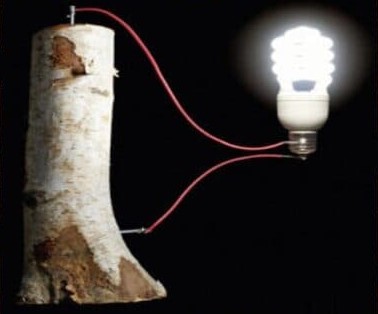
Wood-based sawdust batteries use wood derivatives, such as lignin, to create key components of the batteries, such as electrodes.
Lignin is an abundant natural polymer that can be transformed into activated carbon, an essential material for batteries that can be used both in cathodes, as a replacement for graphite, and as a catalyst.
Wood-based sawdust batteries use wood derivatives, such as lignin, to create key components of the batteries, such as electrodes.
Lignin is an abundant natural polymer that can be transformed into activated carbon, an essential material for batteries that can be used both in cathodes, as a replacement for graphite, and as a catalyst.
Research allows overcoming significant economic barriers.
A group of researchers from the University of the Basque Country (UPV/EHU) in Spain, led by Idoia Ruiz de Larramendi, has developed a hybrid supercapacitor using carbon derived from Pinus radiata waste.
This innovation focuses on creating high-performance electrodes from waste wood particles, transformed for lithium-ion capacitors (LIC).
LIC combines the advantages of lithium-ion batteries (high energy) and supercapacitors (high power and rapid charging), overcoming their limitations.
The Advantages of Wood-Based Sawdust Batteries Are Many:
- Environmental Sustainability
- The use of sawdust reduces industrial waste and promotes a circular economy.
- Lignin is a renewable and biodegradable resource, unlike traditional materials such as lithium.
- Cost Reduction
- Sawdust is an economical and abundant byproduct, making this technology potentially more accessible.
- Promising Performance
- Preliminary studies suggest that lignin-based batteries may offer competitive energy density compared to traditional batteries.
And Challenges Are Many as Well:
- Energy Efficiency
- Wood-based batteries are still under development and may not be as efficient as lithium batteries.
- Durability
- The durability and long-term stability of these batteries need to be improved.
- Scaling Up Production
- The transition from research to industrial production represents a significant challenge.
Potential Applications:
- Consumer Electronics
- Smartphones, laptops, and other devices could benefit from more eco-friendly batteries.
- Electric Vehicles
- Although still far from being implemented, these batteries could revolutionize the transportation sector.
- Energy Storage
- Wood-based sawdust batteries could be used to store renewable energy, such as solar or wind power.
Research on wood-based sawdust batteries is still in its early stages, but preliminary results are promising.
With further investments and innovations, this technology could become a key component of a sustainable energy future.
