
Share This Article
The Return to Oil …
Global oil interests are becoming concentrated.
And now Guyana has become the testing ground for the impact of resources in the twenty-first century.
Around this South American country, Exxon and Chevron are competing to acquire Hess, one of the key companies involved in the discovery of Guyana’s oil reserves.
This oil-producing nation, which until recently was one of the poorest in South America and the world, has reached the tenth position in the ranking of the richest countries.
Guyana is now, according to the International Monetary Fund, alongside energy giants such as the United States, Norway, and Qatar, as well as tax havens like Luxembourg and Panama.
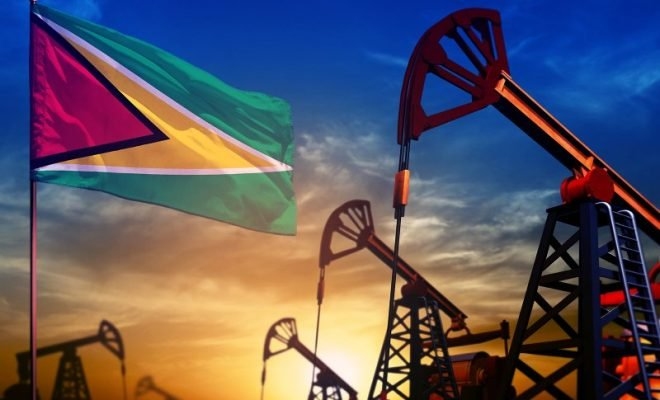
This ascent by Guyana was made possible by the significant discoveries made in 2015 by a consortium of companies led by the US firms ExxonMobil and Hess and the Chinese company China National Offshore Oil Corporation (CNOOC).
Since then, more than thirty offshore oil fields have been identified along the country’s coasts, which, according to estimates, should contain at least eleven billion barrels of crude oil.
These fields have profoundly transformed Guyana’s economy.
In 2023, the country earned 1.6 billion dollars from oil.
Over the last five years, its national economy has quadrupled, making it the country with the highest growth rate in the world for two consecutive years.
The situation became more complex on February 26, 2024, when Chevron announced it could pull out of the $53 billion deal it had planned to acquire Hess.
Exxon and CNOOC claim they have a veto right over the operation, particularly concerning the oil fields in Guyana.
The question is whether Guyana will emerge as a winner from the oil battle.
The former British colony has strengthened its economy like never before, but it is not guaranteed that all this wealth will ultimately improve the living conditions of the population.
The South American country risks falling prey to the resource curse, that is, becoming overly dependent on its raw materials without developing other sectors.
This scenario has already been observed in many other oil-producing nations.
Guyana has created a fund to finance the construction of bridges, roads, and schools, and to provide subsidies for the most disadvantaged citizens.
So far, nearly 1.8 billion euros have been invested.
However, efforts to distribute the wealth generated by oil are also exacerbating ethnic and political divisions.
Furthermore, the government is accused of having signed an oil revenue agreement that makes too many concessions to Exxon.
The International Monetary Fund has labeled it “unfair.”
Exxon is not required to pay taxes in the country, but only a 2 percent tax on extraction permits.

Some environmental groups are alarmed by the fact that Exxon would not be forced to bear alone the consequences of a potential environmental disaster.
An incident similar to the one that occurred in 2010 in the Gulf of Mexico could weigh on the US company’s balance sheets by up to two billion dollars.
The latest major oil state, as defined by the Financial Times, is emerging amidst the fears and protests of environmentalists, labor unions, and civil rights activists in a world that should be committed—even as the many interests of the Seven Sisters push to leave fossil fuels behind.
In many cases, the sudden influx of petrodollars has produced inflation, undermined local industry, and exacerbated social tensions and corruption.
Just consider what has happened in Equatorial Guinea, where oil has been extracted for almost thirty years yet the majority of the population remains extremely impoverished, or in Venezuela—a model of poor economic management, corruption, and authoritarianism.
As Latin America expert Schreiner Parker of research firm Rystad Energy told the Financial Times, Guyana is “the testing ground for the resource curse in the twenty-first century.”
